The Maids of Portland, Maine

Wednesday, September 7, 2016

What are the differences between cleaning and disinfecting or sanitizing?

Clean: Physically remove dirt, germs and debris from a surface by scrubbing, washing and rinsing. It is done using soap or detergent and water

Sanitize: Apply a product that kills 99.9% of the germs identified on its label.

Disinfect: Apply a product that kills nearly 100% of the germs identified on its label.


Daily Practices That Matter…


  1. Wash your hands often
  2. Understand the difference between cleaning, sanitizing and disinfecting
  3. Choose the right product(s) for the job
  4. Read, understand and follow instructions for time between using and rinsing products
  5. Never mix products unless the label indicates that it is safe to do so
  6. Store products in a locked location that children cannot access
  7. Call the Poison help line at (800) 222-1222 if an accidental exposure occurs


  Courtesy of: American Cleaning Institute
                          

Friday, July 15, 2016

Five Toxic Household Products You Should Throw Away

Could your choice of shampoo or cookware be harming your health? A growing body of research suggests that chemicals in everyday products may  put us at risk for health problems – from infertility and birth defects to certain types of cancer.


While it’s impossible to avoid exposure to all environmental chemicals, there are ways to rid your home of many of these potential toxins.. Here are 6 items you may want to avoid buying, toss or replace. Of course, it may not be practical for you to toss all of these items at once. Instead, try swapping out one product at a time with a safer version. Even small steps to minimize your chemical exposures can create a healthier and safer home.


1.) Air Fresheners: Plug-in scents or synthetically scented candles many contain chemicals called phthalates, which have been linked to reproductive problems. Instead, choose candles made with essential oils and fresh flowers to scent your home. Also,  try using baking soda and white vinegar as odor absorbers.


2.) Fabric and Upholstery Protection Sprays: Stain blockers essentially create an invisible plastic barrier over your furniture. This plastic will eventually wear off and be released into your home environment. Instead, simply clean stains as necessary rather than trying to prevent them.


3.) Sunscreens with Oxybenzone: Research on animals suggests that chemicals in some sunscreens, including oxybenzone, may cause healthy problems when they penetrate the skin. The safest sunscreens are made from minerals such as zinc oxide and titanium dioxide, but they can be very expensive. In general, avoid aerosol spray sunscreens, which you can accidentally inhale.


4.) Prepared Foods in Plastic Containers: You don’t necessarily have to toss these, but don’t heat them up in the plastic. Heating plastic can release chemicals that seep into your food. It’s well worth your time to take a few extra seconds to transfer prepared foods into a glass container before heating them in the microwave.


5.) Perfumes : The one-word ingredient “perfume” can translate to a product containing upwards of 300 chemical ingredients. (Perfume companies won’t release lists of exact ingredients for fear of divulging secrets to their competitors.) Avoid perfumes and colognes or switch to products that are scented with natural oils.


Courtesy of : Everyday Health

Thursday, May 26, 2016

Four Unexpected Causes of Pollution

Four surprising ways you're hurting the environment—and the surprisingly easy changes you can make to be greener. 


1> Using Body Wash All The Time...
Liquid soaps require five times more energy for raw-material production and nearly 20 times more energy for packaging production than bar soaps do.
Greener Habit...Stick with bars when you wash up. Not only do they have a considerably lower impact on the environment but also you'll use less.


2> Being Oblivious to Your Electronic Settings...
The average home contains about 24 energy-sucking electronic devices, with TVs, desktop computers, cable boxes, and game consoles among the worst.
Greener Habit...It's easy to tweak a TV, so start there. Select "home" mode in the setup instead of "retail," which is meant for a bright in-store display. If there is an automatic brightness control, turn it on.


3> Running the Dishwasher and Clothes Dryer During the Day...
These machines produce heat and humidity, which means your air conditioner has to work harder
Greener Habit...Use your dishwasher and dryer during off-peak hours, which typically start between 8 P.M. and midnight and end around sunrise.


4> Overdoing It With Aluminum Foil...
Americans discarded about 2.8 million tons of aluminum—including containers, cans, and foil—in 2013, according to the Environmental Protection Agency. Whereas soiled containers can be recycled, dirty foil can't. And it can take centuries for aluminum to biodegrade.
Greener Habit...Use unbleached parchment paper for baking and roasting as well as for wrapping sandwiches and snacks. It's biodegradable, compostable, and often reusable.


Courtesy Of: Real Simple

Monday, May 2, 2016

Cleaning Products You Should Never Mix

When you're faced with a tough cleaning job, it's easy to get frustrated — and tempting to get creative with how you combat it. But before you reach for every cleaning product under your sink and start playing chemist, please just don't. "People often think that if one product works, mixing it with another one will make it even better," says Carolyn Forte, director of the Cleaning Lab at the Good Housekeeping Institute.

But here's the scary truth: "Certain products, which are safe when used alone, can sometimes cause unsafe fumes or other chemical reactions when mixed with other products," says Nancy Bock, Senior VP of Education at the American Cleaning Institute.

And even if your ad-hoc cleaner combo isn't dangerous or toxic, you can never be sure what effect two products can have on a surface or fabric when combined. Always read the warning and ingredient labels on cleaning products — and never mix these:

1.) Drain Cleaner and Drain Cleaner... Never mix two different drain cleaners together as they are powerful and can lead to an explosion.

2.) Baking Soda and Vinegar...One is basic and one is acidic. When you put them together what you get is basically water. If mixed together and stored in a tight container, the mixture can explode.

3.) Hydrogen Peroxide and Vinegar...combining the two can be potentially toxic and can irritate the skin, eyes and respiratory system.

4.) Bleach and Vinegar...Together they produce chlorine gas which can cause coughing, breathing problems and burning, watery eyes.

5.) Bleach and Ammonia...Bleach and ammonia produces a toxic gas called chloramine which causes the same symptoms as bleach and vinegar-along with shortness of breath and chest pain.

                                                                                    
Courtesy Of: Good House Keeping

Tuesday, January 12, 2016

The Toxic Characteristics of Carpets

New Carpets:
  • Contain toluene, benzene, formaldehyde, ethyl benzene, styrene, acetone and a host of other chemicals that are known carcinogens and produce fetal abnormalities in test animals. These chemicals also cause hallucinations, nerve damage and respiratory illness in humans.

  • That 'new carpet smell' comes from 4-PC, associated with eye, nose and upper respiratory problems. 4-PC is used in the latex backing of 95% of US carpets.

  • Other compounds that affect your health are adhesives, flame retardants and stain protectors. In 2000 the 3M Company removed the chemical perflouro-octanyl salphonate from their product, Scotchgard, because it had been found to cause reproductive problems in rats.

  • Mothproofing chemicals contain naphthalene, which is known to produce toxic reactions, especially in newborns.
The obvious preferred option would be to get rid of any carpeting to reduce your exposure to carpet toxins, and replace carpeting with tiles, wood or bamboo.


Courtesy of : Green and Healthy
Dawn Michael

Friday, October 23, 2015

Toxins in Candles: Sad, But True

There’s nothing like the gentle flicker of a candle flame, and a warm, sweet scent filling your home to evoke feelings of peace and wellness.  Except when that candle is actually filling your home with toxic chemicals and contributing to indoor air pollution.


Paraffin is the major ingredient in most candles and is a sludge waste product from the petroleum industry. It releases carcinogenic chemicals when burned. The soot/fumes are similar to that released from a diesel engine and can be as dangerous as second hand smoke. This can contribute to serious respiratory issues like asthma.


Scented candles may have lead or lead cores in the wick, which releases dangerous amounts of lead into your home through the candle soot. In 2003 the USA passed legislation to ban lead wicks, but they still find their way to store shelves from China, Taiwan and Canada. Two particularly toxic chemicals, benzene and toluene, are also found in the sooty residue from burning candles. Benzene is cancer-causing and toluene affects the central nervous system.


The very best options for candles are beeswax candles. They are absolutely pure and burn clean. It has a light scent of honey and they come in a range of color options.

              
Courtesy of: Keeper of the Home

Friday, September 18, 2015

5 Things To Add To Your Fall To-Do-List

You probably give your home a deep clean in the spring, but you should also show it some love at the beginning of fall. Here's where to start:


1. Perform a pantry audit.

First, remove all the cans and boxes from the shelves, and vacuum away any lingering dust or crumbs (a lot can build up in just a few months!). Then, inspect each item before putting it back in its place, tossing anything that is expired or past its prime.

2. Test and clean your smoke detectors.

You already know to put fresh batteries in your smoke alarms and carbon monoxide detectors (doing it on the days you change the clocks for Daylight Saving Time is an easy way to remember). But you also need to clean your units, since dust that accumulates can cause them to underperform.

3. Flip your mattress.

When you turn back your clocks, turn your mattress over, too. If you can't flip it because it has a pillow top, rotate it 180 degrees to prevent body impressions form causing certain spots to slump. Sprinkle the mattress with baking soda to neutralize odors, and then vacuum it up.4. Shampoo your carpet.

4. Shampoo your carpet.

Get a jump on holiday party season by giving your carpeting a good scrub. We recommend getting a professional cleaning once a year, but you can also do a good job by renting a carpet cleaner.


5. Vacuum all upholstered surfaces.
 
You think your couch is clean until you plop on it, and a haze of dust appears around you. Give sofas and chairs a good vacuuming, making sure to hit both sides of the cushions, the back, sides, arms,even the platform underneath the cushions.

               
Courtesy of: Good HouseKeeping


Tuesday, July 7, 2015

5 Smart Ways to Stretch Your Cleaning Products

1. Don't automatically fill both dispensers in your dishwasher.
The detergent box recommends it, but it's better to adjust the amount of detergent to the soil level of the load and the hardness of your water. Start by filling each cup halfway, adding a bit more for extra dirty dishes and hard water. Plus, using too much detergent can leave a filmy residue on your glasses and flatware.


2. Always measure laundry detergent.
I know the numbered lines inside detergent caps are impossible to see, but with today's 2x and 3x concentrated detergents, a full cap is too large a dose for most loads. Adding more detergent won't get clothes any cleaner; instead, laundry can still be soapy at the end of the cycle and front-loading washers that are sensitive to excess suds may shut down.


3. Spray the cloth, not the surface.
When cleaning mirrors, polishing furniture, and shining stainless steel appliances, spray the cleaner directly on the rag. Spritzing the surface often wastes product and leaves behind excess cleaner that requires more wiping and extra buffing to remove — who needs that?


4. Choose a foaming bathroom tub and tile cleaner.
These cling to vertical surfaces better than thin sprays do, so you'll get more muscle from less product. After spraying a small section of tile, use your sponge or cloth to spread it around. Wait a few minutes for the formula to penetrate the soil, then wipe or rinse the surface clean.


5. Use multitasking products. Products like Good Housekeeping Seal-holder Simple Green All Purpose Cleaner and OxiClean Versatile Cleaner can be used for around-the-house cleaning jobs and for laundry stains. You'll not only save money with these workhorse products, but storage space, too.
             

Friday, April 10, 2015

How to Prevent Pollen Allergies

Approximately 40 million Americans are affected by allergies. The resulting upper-respiratory symptoms, known as "allergic rhinitis," are commonly called "hay fever" when caused by pollen sensitivity. Hay fever is characterized by itchy eyes, runny nose, sneezing and coughing, and it can make sufferers miserable. Though it is difficult to avoid the pollen that's making you sneeze, there are ways to prevent your hay fever from getting out of hand.

> Find out what you are allergic to and learn to recognize it. The best way to prevent pollen allergies is to avoid spending time around the types of trees, shrubs, grasses or weeds that cause your symptoms.
 
>Keep windows closed and don't run attic fans, which allow pollens into your home. To stay cool, run central air or a window air-conditioning unit; change the filters regularly to prevent pollen and dust buildup.
 
> Wash pets frequently, and wipe or brush them down when they come in from outdoors. Pollens hitch a ride into your home on your pet's fur, so keep the animals out of your bedroom and off of furniture.
 
> Dust and vacuum at least two to three times a week to prevent indoor pollen buildup. Consider wearing a respirator when you are doing housework, as airborne pollens and dust particles are stirred as you clean and may jump start your allergies.
 
> Run a High-Efficiency Particulate Air (HEPA) air cleaner in your bedroom to rid your home of pollens that enter indoors. Breathing cleaner air at night can help you feel better when you start your day.
                
Courtesy of: eHow Health Editor


Tuesday, March 3, 2015

This spring rid your kitchen of hidden toxins!

As spring approaches, we thought that we would share with you a list of some of the most important products that you can easily replace for a toxin free kitchen.

Bleached Paper Products:

Most paper products in the United States are bleached with chlorine gas or chlorine derivatives. These chlorine chemicals are known to create dioxins as a by-product of the bleaching process.

Even in small amounts, dioxin is agreed upon to be toxic.

Two of the most popular bleached products we use in our kitchen are parchment paper and coffee filters.

                  > Parchment Paper: Instead of white parchment paper, replace it with natural unbleached parchment.
                  > Coffee Filters: Instead of white coffee filters, choose brown-less toxins.

Baking Products:

Bleached white flour is generally made with benzoyl peroxide. To avoid the toxins, purchase unbleached flour. Did you know that baking powder contains aluminum? Aluminum is best to avoid since it accumulates in the brain and can bring on diseases such as Alzheimer's. The next time you need to buy baking powder, choose Rumford Baking Powder which is aluminum free.

Canned Foods:

Bisphenol A is an industrial chemical used in the liners of most metal cans. Cans made with BPA can leach into the containing food and acts as an environmental estrogen. Once ingested it effects our brain disrupting proper hormone functioning. It has been controversial for some time, however, the FDA now shares a level of concern and many companies are going BPA free.


Tuesday, February 24, 2015

Children Act Fast, So Do Accidents

National Poison Prevention Week is March 15-21, 2015 and there is no better time to think about your laundry routine! Make it a habit to always store liquid laundry packets out of reach and sight of children to prevent injury and in their original package until you are ready to use them.

WARNING! Children are curious and whether you want them to or not, tend to put all sorts of different things in their mouth. Food, rattles, toys, teethers – you name it. And even some things they shouldn’t.

Serious harm including accidental ingestion and eye exposure can occur if children get their hands on liquid laundry packets. Each laundry packet contains highly concentrated detergent and can cause serious injury if they end up in the hands and mouths of children.

Parents know that children act fast which is exactly why it is essential to get in the habit of always storing liquid laundry packets along with all other household cleaning products in a safe place that is out of reach and sight of children. And, always remember to keep laundry packets in their original package until they are ready to be used.

Liquid laundry packet accidents are more common than you think. In 2013, there were over 10,000 laundry packet exposures in children five and younger. Protect your children. Here’s how:
  • Do not let children handle laundry packets
  • Do not puncture or pull packets apart
  • Store out of child's sight and reach
  • Packets quickly dissolve upon contact with water, wet hands, or saliva
  • Packets can rupture, releasing contents into eyes
                    
Courtesy of: The American Cleaning Institute

Wednesday, February 4, 2015

Three Ways to Detox Your Laundry


Check out these three ways to detox your laundry:

1.) Switch to a natural detergent. Stay away from optical brighteners which give the illusion that fabric is whiter/brighter than it really is. These can actually cause build-up on your laundry and even cause skin irritations. Try a homemade detergent and here is a list of five homemade natural detergents recipes that you may want to try.


2.) Use natural stain removers. If you have a tough stain, hanging the article of clothing out in the sun for a couple of hours will usually bleach out the stain within hours. Or you can try adding an oxygen bleach to the wash or dissolve powered oxygen bleach in water and spray it directly on the stain. You may also want to try one of these 10 homemade, all natural stain removers.


3.) Ditch the fabric softener. White vinegar is the perfect alternative to fabric softener. And not only does it soften, but it can also take the sour smell out of wet clothes that have sat in a washing machine too long.


                                                        Courtesy of: Keeper of the Home


Friday, November 21, 2014

It's almost turkey time. As Thanksgiving is a time of sharing, following are 10 helpful tips to garnish the day:

  1. Count backwards. Does the turkey need to thaw? How many pounds equal how many hours equal when do you want to serve the meal?
  2. Start a family tradition. If you don't already have one, state up front, "And in keeping with our family tradition, I'd like to..." This sets it up right there. No one (except, perhaps, an offspring), will ask, "What family tradition?"

  3. We tend to forget that Thanksgiving for the Pilgrims was a picnic. Not recommending we go quite that informal, but still...

  4. Forget the starched linen napkins. They will only get gravy stains.

  5. Put goblets above the knife, to the top right of the plate. (Note: Goblets are not the same as giblets.)

  6. Take a break at some point, relax and place your bet for "Best in Show" at The National Dog Show on NBC.

  7. Back at the table, show-off your host/hostess grace: Serve from the left. Clear from the right.

  8. Give extras points (silently) to anyone who passes the salt and pepper as a set, even if someone only asked for one.

  9. Don't go overboard on the selection of pies. Three pies are more than enough if you are having 10 guests or less. That's 24 slices of pie, people.

  10. Know the word "schmootz." It is a piece of food, e.g., a small dash of the mashed potatoes or pumpkin pie crust that went astray on the chin. Or the cheek. Or somewhere else on the face. It is perfectly polite to say, "Excuse me, but you have a schmootz." To be exquisitely helpful, point to its location on your own face.
                 
Courtesy of: The Huffington Post
                     Bonni Brodnick

Tuesday, October 28, 2014

Let Daylight Saving Time be a Reminder to Tackle Important Biannual Chores.

In a new national survey, 70% of Americans polled are avoiding cleaning tasks that are beneficial to the health of their homes. The three chores that are most likely to fall to the bottom of the biannual to-do list are rotating and cleaning of ceiling fans, cleaning vents and registers, and vacuuming and flipping the mattress.

Air quality is a hugely important part of maintaining a clean home. When there is dust build up on your register covers, in your mattress, on your blinds and your ceiling fans, your family is breathing potentially harmful airborne particles. In addition to eradicating dust, other important biannual tasks include cleaning your pantry, fridge, freezer and purging them of expired food, washing or replacing your shower curtain or liner, and wiping down baseboards and molding throughout your home.

The Maids employs professionally uniformed and trained four-member cleaning teams who arrive at customer's homes in signature yellow cars emblazoned with The Maids logo. The Maids exclusive team approach provides the most efficient, comprehensive housekeeping in the industry. The Maid's team is bonded and insured and all services are backed by a 100% satisfaction guarantee. To learn more about The Maids, call 207-772-6212.


Tuesday, October 7, 2014

Cleaning Granite- The Proper Way

The consensus among stone experts is that you do not need any special cleaners to get your countertops clean and streak-free. It is important to make sure your granite countertop is sealed. While granite is a very hard surface and less porous than marble, unsealed or weakly sealed granite will soak up oils, spills, and stains. To check whether your granite is sealed, leave a few drops of water on the surface. If it beads up, you have a secure seal. If after a few minutes the water has soaked into the granite, then it's time to reseal the stone.

DON'T: Use harsh or abrasive cleaners and sponges, Windex, acidic cleaners like vinegar, lemon, lime, or anything with ammonia or bleach. Frequent use of these chemicals will dull and weaken the sealant over time. Basically, the harsher the cleaner, the quicker it will break down the sealant.

DO: Wipe up spills as soon as you notice them.

DO: Use warm water, a mild or gentle dish soap, and a nubby washcloth or microfiber cloth for daily wipe downs.

                   
Courtesy of: House Beautiful


.

Wednesday, September 10, 2014

Cleaning Tips To Solve Any Cleaning Crisis

Tackle any household disaster — including stained carpets, gunky kitchen appliances, cluttered rooms, and more — with easy cleaning tips from Heloise.

Shower Curtain Scum: Put plastic shower curtains and liners in the washing machine, and add a bath towel for scrubbing action, along with your regular amount of detergent. Pop them in the dryer for several minutes or hang to dry.

Bathtub Stains: Put 1/4 cup powdered dishwasher detergent in a glass measuring cup, and add enough water to make a paste; stir with a nonmetal utensil then apply to the stain, scrub lightly, and let set for 20 minutes. Rinse well. If the glaze on the tub has worn off, you may not be able to remove the stain.

Shower Door Soap Buildup: Use a plastic scrubbie or a microfiber cloth dipped in white household vinegar to wipe down the doors, or squeeze cheap shampoo on a plastic scrubber and rub over the area to help dissolve the film. Let sit for a few minutes, then use a squeegee to clean off the residue. Keep a spray bottle filled with vinegar handy and apply when you start to see a haze.

Showerhead Buildup: Remove the showerhead and soak it in white or apple-cider vinegar. If you can't disconnect the showerhead, partially fill a plastic bag with vinegar and tape or tie the top of the bag around the showerhead so the nozzle end is submerged in liquid. Let it sit overnight. The vinegar should dissolve the mineral deposits. Use a toothpick to clear any debris from the holes so the water flows freely.

Grout Stains: Wear rubber gloves and eye protection and mix 3/4 cup household chlorine bleach with 1 gallon water. Use a soft-bristle brush to apply to one small area at a time. Don't let the liquid spatter onto surrounding surfaces. Let it sit for several minutes, then scrub and rinse.                 


Courtesy of: Good Housekeeping
                     By Heloise

Wednesday, July 23, 2014

Four Smart Ways To Kill Fruit Flies


You’re not alone in your love of seasonal produce: Pesky fruit flies always seem to find their way to your farmer’s market haul before you even get a chance to fully enjoy it. Tired of them taking over? First toss anything overripe, and then try one of these effective remedies to banish them from your kitchen.
 
1. Unfiltered apple cider vinegar
Remove the cap from the bottle (it doesn’t have to be full — nearly empty will also work). Cover the opening in plastic wrap and secure with a rubber band. Then, poke a hole for the fruit flies to enter. They can’t resist the scent of vinegar, and they won’t be able to exit once they’re inside.


2. Vinegar and dish soap
If you find your fruit flies are impervious to the plastic wrap, try adding three drops of dish soap to a bowl of vinegar, and leave it uncovered. The soap cuts the surface tension of the vinegar so the flies will sink and drown.


3. A paper cone and a piece of fruit
Place a little vinegar and a chunk of very ripe fruit in a jar. Then, roll a piece of paper into a cone and stick it into the jar, placing the narrow opening down. The fruit flies will be drawn in, but won’t be able to get out.

4. Red wine
Like vinegar, fruit flies love the smell of wine. Try leaving out an open bottle with a little liquid — the skinny neck will keep the flies trapped.

Courtesy of: Lauren Piro            Good Housekeeping

Thursday, June 26, 2014

Cleaning for Health

Household cleaning products intended to kill germs on inanimate surfaces are typically said on their labels to disinfect, kill bacteria or sanitize. Depending on their active ingredient(s) and specific formulation, these products may kill a wide variety of microorganisms that can live on household surfaces, such as foodborne bacteria like Salmonella; the cold virus; and fungus that causes athlete's foot. Household cleaning products designed to kill germs on surfaces have been available for more than 100 years. They are regulated by the U.S. Environmental Protection Agency.

  • Regular cleaning products do a good job of removing soil, but only disinfectants or disinfectant cleaners (also known as antibacterial cleaners) kill the germs that can cause many illnesses.
  • Surfaces like kitchen and bathroom counters, door knobs, toilet seats and children's toys may be contaminated with bacteria even when they're not visibly soiled.
  • Germs can be spread to other surfaces on dirty cleaning cloths and sponges.
  • Products that claim to kill germs must meet efficacy requirements and guidelines established by the U.S. Environmental Protection Agency (EPA), and must be registered with EPA and carry an EPA registration number on their label.
  • In order for surfaces to be effectively disinfected, the instructions on product labels need to be followed carefully.


  •                 
    Courtesy of: Clean Living


    Monday, June 9, 2014

    Five Green Claims That May Be Misleading

    As smart shoppers, we’re all aware that the consumer goods industry is full of misleading marketing claims, and the eco-friendly product space is one place to be especially wary. While the Federal Trade Commission (FTC) regulates these statements, it can be tricky to decipher which labels are true and which don’t mean anything at all.

    Here are five common buzzwords you’ll recognize — and tips for when you should be skeptical:

    1. Eco-Friendly:
     When a product is labeled “eco-friendly,” “environmentally friendly,” or “green” without providing an explanation, chances are it’s just a marketing gimmick. These terms can be misleading because they let you assume that the product is good for the environment. Essentially every product will have some type of unwanted effect, but slapping on “eco-friendly” implies that the product has no negative environmental impacts.

    Look for super-specific details instead of broad phrases, such as “eco-friendly: product is made from 60% recycled fiber.” The more details given, the better you can understand what the environmental benefits might be.

    2. Natural:
    There is no legal definition for the word “natural” when used on consumer goods. “Natural” suggests the product comes from plants, minerals, and other things found in nature. But by the time most products reach you, the raw materials and ingredients have gone through a series of manufacturing processes and therefore have been synthetically altered.

    If you’re curious about natural food products, Whole Foods has a comprehensive list of ingredients that are not accepted at their stores. If you’re looking for natural beauty and cleaning products, they should only contain plant- and mineral-based ingredients that are minimally processed.

    3. Recycled:
    A manufacturer can claim that a product contains recycled content only if the materials would have otherwise ended up as trash (either from a manufacturing process or consumer waste). Unless the entire product and its packaging are both made from 100% recycled content, the FTC requires specification. Look out for details on labels. Is the product or the packaging (or both) made from recycled content? How much of it is recycled?


    4. Organic:
    From organic food to organic cotton and more, chances are you’re seeing this word thrown around a lot. Organic means that crops are grown without genetic modification and without synthetic pesticides, fertilizers, and antibiotics. Look out for products with legitimate certifications, such as ones that are USDA certified.

    Keep in mind — just because a product is grown organically, it does not mean it won’t have harmful environmental impacts at some point in its life.

    5. Biodegradable:
    Most consumers assume that biodegradable means, when the product is discarded, it will decompose into the earth in a reasonable amount of time. However, this is not usually true. Many products with this claim won’t actually degrade in a landfill, and it could actually take hundreds or thousands of years for the product to fully deteriorate. So what should you look for? Products that that give you a specific time frame and degrading condition, such as “biodegradable within two years in compost facility.”

                     
    Courtesy Of: Good Housekeeping 

    Monday, April 21, 2014

    10 Places You Always Forget During Spring Cleaning

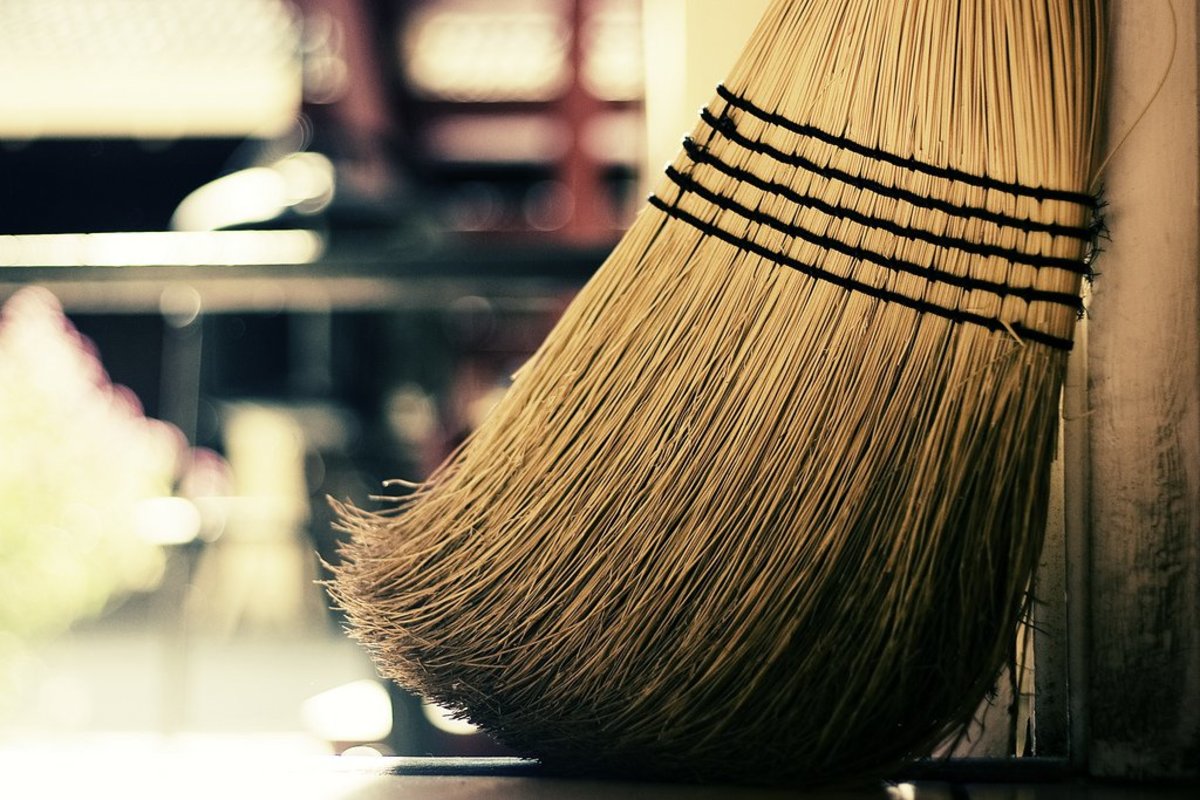
    broom
    Spring is in the air – and so is spring cleaning. There’s nothing like a thorough scrub-down to get rid of the remaining winter muck hanging around your house. However, that’s usually when you realize how many corners you’ve been cutting for the sake of watching “The Good Wife”… which in my opinion is still totally worth it, but that’s beside the point.
    Spring cleaning is the perfect opportunity to catch up on the nooks and crannies of your home. Below are 10 places you’d probably forget without a gentle reminder. (You’re welcome.)

    1. Shower curtain liners

    My shower curtain liner is always the thing I’ll get to later – but you know, never do. Next laundry day, make a mental note to run it through the wash.

    2. Blinds

    Get into the habit of vacuuming your blinds on a weekly basis to save yourself the hassle later. Trust me.

    3. Ceilings

    The ceiling is a super easy area of your home to forget. Meanwhile, there’s a lot going on up there. Check for cobwebs and dust on your ceiling fans and light fixtures, and in the corners.

    4. Plant leaves

    It’s important for your plants to have good hygiene too! Carefully wipe leaves with a damp cloth.

    5. Baseboards

    Depending on how long you’ve neglected your baseboards, spring cleaning is the perfect time to go at them with a damp cloth. Afterward, you can maintain them every few weeks with a duster.

    6. Door handles/knobs

    Considering how often we touch handles and knobs, I’m surprised at how easy it is to forget them during cleaning sessions!

    7. The front door

    It gets pretty mucky outside – especially this time of year – and when guests are waiting for you to let them in, they’re staring at your equally mucky door.

    8. Light switches

    Go and check out your light switches: Are they still their original color?

    9. Chair legs

    We’re so focused on wiping off seats that the legs end up a little worse for wear.

    10. Curtains

    Vacuum your curtains during your everyday cleaning sessions, but when spring cleaning rolls around take them down to be washed.

    Courtesy of: Organic Authority